
Master the Greens: How Zero Torque and AI Putters are Changing the Game
They say you drive for show and putt for dough, yet for decades, amateur and professional golfers alike have relentlessly chased distance off the tee while largely ignoring the technological revolution happening right inside their golf bags. If you are still gaming a putter from the late 90s, you might be leaving strokes on the green.
The putter is the most used club in your bag, accounting for roughly 40% of your shots in a standard round of golf. Recently, two groundbreaking advancements have disrupted the putting landscape: Zero Torque technology and Artificial Intelligence (AI) face design.
In this comprehensive guide, we are diving deep into the mechanics, the pros and cons, and the real-world application of these space-age flatsticks. We will also explore how traditional milled blades still hold their ground, and why your footwear and apparel play a surprising role in your putting success.
The Evolution of the Putter: From Hickory to High-Tech
To understand where we are, we must briefly look at where we came from. Early putters were essentially just straight-faced irons on hickory shafts. By the mid-20th century, perimeter weighting (like the iconic Ping Anser) changed the game by increasing forgiveness. Later, mallet putters introduced massive Moment of Inertia (MOI), reducing twisting on off-center hits.
But for all these advancements, putters still required the golfer to manipulate the clubface during the stroke. That was until aerospace engineers and computer scientists started looking at putting not as an art, but as a physics equation.
"The modern putter is no longer just a block of metal; it is a meticulously engineered instrument designed to eliminate human error."
What is Zero Torque in a Putter?
If you hold a traditional toe-hang putter lightly in your hands and let it balance, the toe will point toward the ground. If you hold a face-balanced putter, the face points to the sky. However, when you actually swing these putters on a tilted plane (your lie angle), gravity and physics cause the putter face to want to open on the backswing and close on the through-swing.
Zero Torque putters (most notably championed by brands like L.A.B. Golf - Lie Angle Balance) are designed to stay completely square to your arced path throughout the entire stroke without any manipulation from your hands.
The Mechanics Behind the Magic
Zero Torque is achieved by perfectly aligning the center of gravity with the axis of the shaft at a specific lie angle. When you swing a Zero Torque putter, it does not want to twist. It feels almost weightless in its rotation.
Pros and Cons of Zero Torque Putters
Pros:
- Less Grip Pressure Required: Because the putter isn't fighting to twist, you can hold it with a feather-light grip.
- Unmatched Face Control: The putter stays square to the path naturally, drastically reducing pushed and pulled putts.
- Mental Freedom: You can stop worrying about your wrists breaking down and simply focus on distance control.
Cons:
- Aesthetics: To achieve this balance, many zero torque putters have unconventional, sometimes bulky, spaceship-like head shapes.
- Learning Curve: If you have spent 20 years manipulating a putter face, a putter that does the work for you can feel strangely "dead" or robotic at first.
- Custom Fitting is Mandatory: Because the balance relies on the lie angle, you cannot easily buy one off the rack without knowing your exact specs.
Artificial Intelligence Enters the Chat (AI Putters)
While Zero Torque focuses on the path and face angle of your stroke, Artificial Intelligence is being used to fix what happens when the putter actually hits the ball.
Even the best tour pros do not strike the exact dead-center of the putter face every time. For amateurs, a mishit on the toe or heel can lead to a 10-foot putt coming up two feet short. Enter AI face mapping, popularized by Odyssey's Ai-ONE line and other major manufacturers.
How AI Face Technology Works
Engineers feed thousands of data points from real golfer strokes into a supercomputer. The computer is tasked with designing a putter face that produces the exact same ball speed whether you hit it perfectly in the center, a quarter-inch off the toe, or low on the heel.
The result is a complex, variable-thickness face insert. The back of the insert (often made of aluminum or titanium) features a topographical map of ridges and valleys. Where the face is thinner, it flexes more, adding speed to mishits. Where it is thicker (the center), it controls speed.
Why AI Putters are Game Changers
- Distance Control: Mishits travel almost the exact same distance as center strikes. This eliminates the dreaded three-putt caused by leaving a lag putt criminally short.
- Familiar Shapes: Unlike zero torque putters, AI face technology can be inserted into classic blades and traditional mallets.
- Softer Feel: Many AI inserts utilize multi-material construction (like co-molded urethane) that provides incredibly soft, satisfying feedback.
Zero Torque vs. AI Face Technology
Which technology should you invest in? It depends on your primary putting flaw. Here is a breakdown to help you decide.
| Putting Flaw | Recommended Technology | Why it Works |
|---|---|---|
| Pushing/Pulling Putts | Zero Torque | Eliminates twisting; keeps the face perfectly square to the arc automatically. |
| Poor Lag Putting | AI Face Technology | Normalizes ball speed across the face; mishits roll just as far as center strikes. |
| Inconsistent Grip Pressure | Zero Torque | Allows for a completely tension-free stroke without the putter face flopping open. |
| Off-Center Strikes | AI Face Technology | The variable face thickness acts as a massive sweet spot, saving your toe/heel strikes. |
Ideally, we will soon see putters that seamlessly blend both technologies—a zero torque chassis featuring an AI-designed face plate.
Blending Tradition with Technology
Despite these incredible advancements, there is still a massive demographic of golfers—including Major champions—who prefer the raw feedback, clean lines, and traditional feel of a CNC-milled blade. The brain is a powerful tool, and sometimes looking down at a classic, beautiful putter inspires more confidence than staring at a computer-generated mallet.
For those who love the traditional look but still want modern precision manufacturing, the Cobra Golf Classic Blade Putter is an absolute masterpiece.
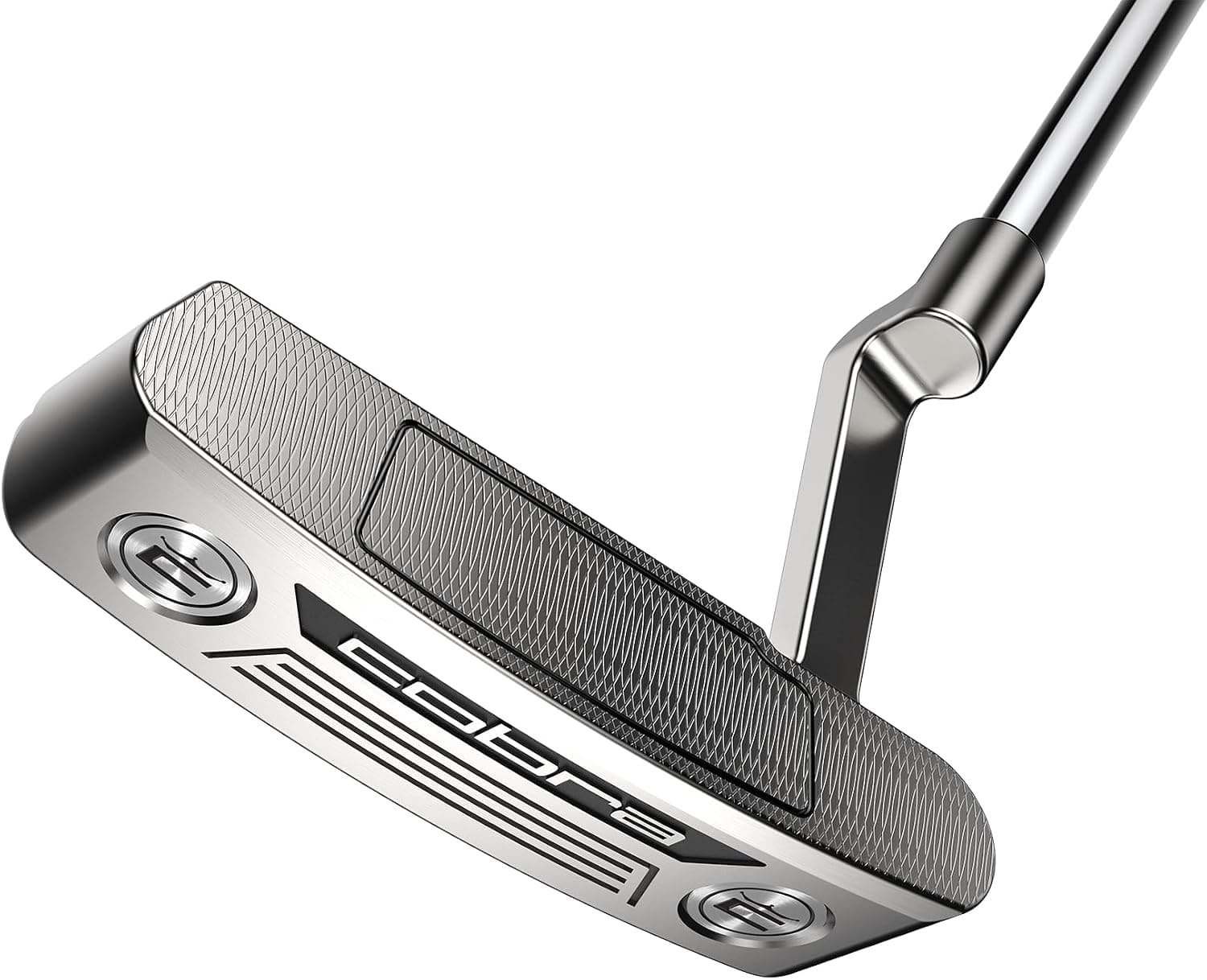
Cobra Golf Classic Blade Putter
$129.00
CNC-Machined Face - CNC-machined for precision and consistency, the face produces a soft feel with a clean, confident sound at impact. Tour-Inspired Alignment- A clean topline and a single sightline deliver a confident setup and control. Stable. Solid. Trusted- The traditional steel shaft remains the gold standard for consistency and control. Its inherent stability keeps the head steady through impact, promoting a smooth, repeatable stroke.
#ad — As an Amazon Associate I earn from qualifying purchases.
Cobra has utilized a CNC-machined face for ultimate consistency. Unlike cast putters of the past, this precision milling produces a remarkably soft feel with an incredibly confident sound at impact. With its tour-inspired single sightline and traditional steel shaft, it provides the inherent stability and repeatable stroke that purists crave. It proves that while AI and Zero Torque are the future, the gold standard of a perfectly milled blade isn't going anywhere.
Looking Good, Feeling Stable on the Greens
We cannot talk about putting without talking about your base. Putting requires absolute stability from the ground up. If your feet are shifting, slipping, or aching during your round, your putting stroke will inevitably suffer. Comfort translates directly to lower scores.
This is why upgrading your footwear to something like the Puma Men's Fusion Crush Sport Golf Shoe can quietly improve your short game.
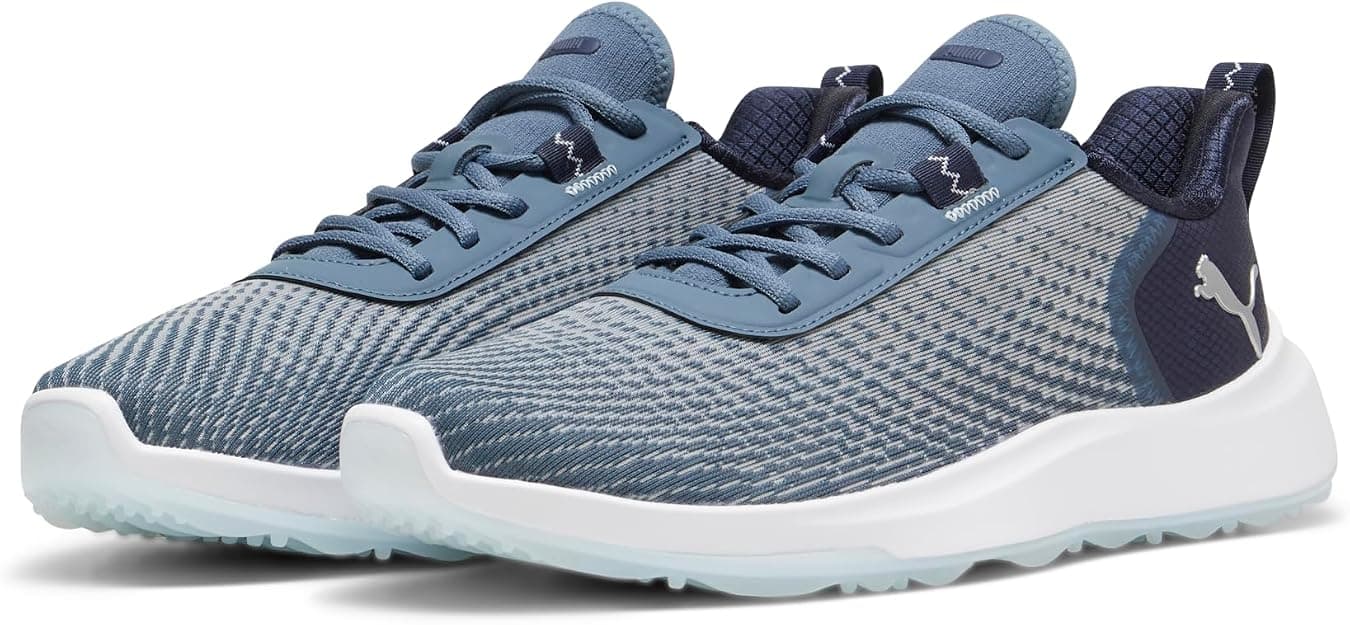
Puma Men's Fusion Crush Sport Golf Shoe
$49.99
ALL-DAY COMFORT: Full-length FUSIONFOAM with soft EVA and responsive rubber cushioning keeps you energized. These men's golf shoes deliver lasting comfort through long rounds on the course. STAY DRY, PLAY HARD: Waterproof mesh upper keeps feet dry in any weather. Designed as spikeless golf shoes for men, they let you focus on your swing without worrying about soggy socks. SUPERIOR TRACTION: Dual-zone spikeless outsole made from durable rubber grips every surface. These mens golf shoes spikeless give stability and confidence for smooth, controlled swings. BREATHABLE SUPPORT: Engineered mesh with breathable membrane lets heat out while keeping elements away. Stay fresh and focused in these breathable golf shoes designed for long play. EASY ENTRY FIT: EVERSTRETCH bootie construction makes slipping into your golf sneakers men effortless. The snug fit supports movement, blending style and performance on and off the course.
#ad — As an Amazon Associate I earn from qualifying purchases.
These spikeless wonders offer dual-zone traction made from durable rubber that grips the green without tearing it up, giving you the steadfast stability needed for a smooth, controlled stroke. Furthermore, the full-length FUSIONFOAM and waterproof mesh upper ensure your feet stay dry and energized through 18 holes. You simply cannot putt well if your feet are soaked and aching by the 14th hole.
Reading the Greens in Style
Finally, putting isn't just physical; it is visual. Glare from the sun can mask the subtle breaks, grain direction, and slopes of a green. Proper headwear is an essential piece of equipment for any serious golfer.
Protect your eyes, read the greens better, and look like a pro with the BirdieFinder Two-Tone Mid Cap Women's – Limited Edition.
This limited-edition structured mid-profile cap is perfect for blocking out the sun while lining up that crucial 10-footer. The breathable performance fabric ensures you keep a cool head under pressure, and the exclusive two-tone design ensures you look sharp doing it. With only 50 pieces in this initial drop, it's a must-have for the stylish golfer.
Conclusion: Which Putter is Right for You?
The putting green is the great equalizer in golf. You don't need to swing at 120 mph to be a scratch putter; you just need mechanics you can trust and equipment that suits your stroke.
- If you constantly struggle with starting the ball on your intended line, Zero Torque might be the holy grail you've been searching for.
- If your speed control is abysmal and you frequently three-putt from 30 feet, AI Face Technology will tighten your dispersion and save you strokes.
- If you are a feel player who relies on touch, sound, and classic aesthetics, a beautifully milled traditional blade like the Cobra Classic is your best weapon.
Whichever route you choose, remember that technology is only as good as the time you invest in practicing with it. Get fitted, find the putter that gives you confidence, plant your feet securely, and go master the greens.
BirdieFinder.Golf is a participant in the Amazon Services LLC Associates Program, an affiliate advertising program designed to provide a means for sites to earn advertising fees by advertising and linking to Amazon.com. #ad — As an Amazon Associate I earn from qualifying purchases.