
How to Choose the Right Golf Ball for Your Swing Speed
Welcome to BirdieFinder.Golf! Have you ever been deep in the woods looking for your wayward drive, only to stumble upon a pristine, shiny Tour-level golf ball? You probably pocketed it like a piece of gold, teed it up with maximum confidence on the very next hole, and then hit an absolute dud that flared off into the right rough.
Don't worry, you aren't alone.
One of the most common and costly mistakes amateur golfers make is playing the wrong golf ball. We spend thousands of dollars getting custom-fitted for drivers and irons, yet we pull whatever ball we found in our bag without a second thought. The reality is that the golf ball is the only piece of equipment you use on every single shot.
If your golf ball doesn't match your swing speed, you are actively leaving distance, accuracy, and greenside spin out on the course. In this comprehensive guide, we are going to break down the science of golf ball compression, explain why your swing speed dictates your optimal ball, and help you find the perfect match for your game.
Why Swing Speed Matters for Golf Balls
To understand why swing speed is so crucial, you need to understand the concept of compression.
Imagine a trampoline. If a small child jumps on a tightly coiled, heavy-duty gymnastics trampoline, they won't bounce very high. They simply don't generate enough force to flex the springs. However, if an Olympic gymnast jumps on that same trampoline, they will soar into the air because their power compresses the heavy-duty springs, which then release and propel them upward.
Golf balls work on the exact same principle.
"The biggest mistake amateur golfers make is playing a high-compression tour ball designed for a 115 mph swing when their driver speed is only 90 mph. It's like hitting a rock."
When a clubface strikes a golf ball, the ball literally flattens out (compresses) against the face before rebounding forward. This "trampoline effect" is what creates ball speed and distance.
- If you play a ball that is too hard (high compression): Your club won't compress the core. You will lose distance, the ball will feel harsh at impact, and you will generate unwanted sidespin (hello, slice).
- If you play a ball that is too soft (low compression): Fast swingers will over-compress the ball, losing energy transfer and ballooning the shot too high into the air.
Finding Your Swing Speed
Before you can choose the right golf ball, you need to know how fast you swing the club. The easiest way to find this out is by hitting a few drives on a launch monitor (like TrackMan or Foresight) at your local pro shop or indoor golf simulator.
Here are the general brackets for driver swing speeds:
- Low Swing Speed: Under 85 mph (Typically hits driver under 210 yards)
- Moderate Swing Speed: 85 mph to 104 mph (Typically hits driver 210 to 250 yards)
- High Swing Speed: 105+ mph (Typically hits driver 250+ yards)
Upgrading Your Speed
If you find that your swing speed is lagging behind where you want it to be, a golf ball can only do so much. Upgrading to a highly aerodynamic, forgiving driver can unlock hidden mph in your swing.
The TaylorMade Golf SIM2 MAX Driver is an absolute powerhouse for golfers looking to maximize clubhead speed. Featuring an asymmetric Inertia Generator and a Speed Injected Twist Face, it is aerodynamically designed to move faster through the air while protecting against heel and toe mis-hits.
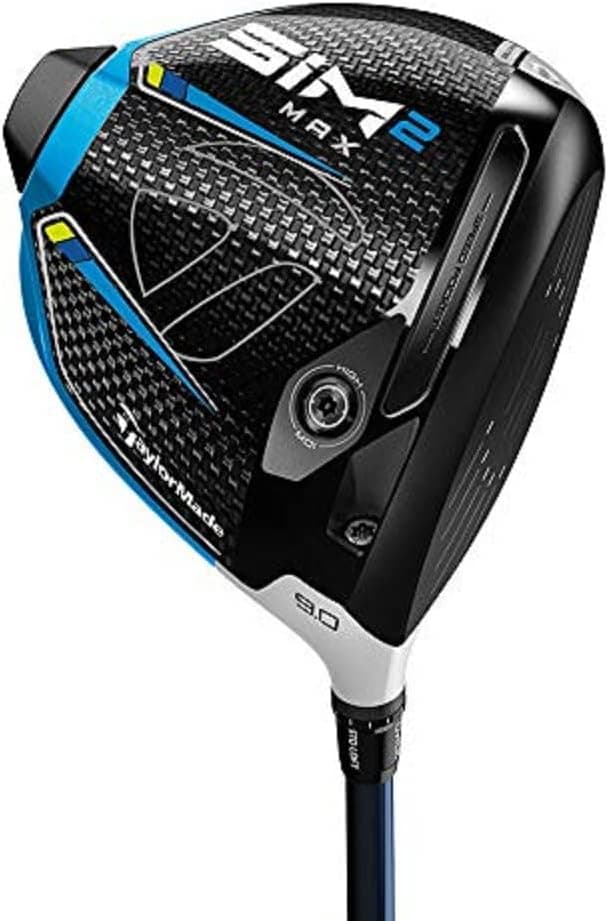
TaylorMade Golf SIM2 MAX Driver
$349.98
New Forged Ring Construction. Forged from a lightweight and high strength aluminum that is milled to an exacting shape, it unites a massive rear weight, a full carbon sole, crown and a new milled back cup face. SIM Inertia Generator. The asymmetric Inertia Generator is designed to provide faster club head speed through advancedgeometry and aerodynamic analytics. Speed Injected Twist Face. Improves ball speed by calibrating each head to the threshold of the legal speed limit with corrective face curvature also protecting against heel and toe mis-hits. Thru-Slot Speed Pocket. Our most flexible Speed Pocket design engineered to maximize ball speeds and produce additional forgiveness on low face strikes. Split Mass Weighting. Designed to enhance forgiveness while allowing for pinpoint target swing weights during custom assembly.
#ad — As an Amazon Associate I earn from qualifying purchases.
Golf Balls for Low Swing Speeds (Under 85 mph)
If your driver swing speed is under 85 mph, your main priority is finding a ball that allows you to effortlessly launch the ball into the air with maximum carry distance.
What to look for:
- Compression Rating: 50 to 70
- Construction: 2-piece design (a large rubber core with a durable cover)
- Cover Material: Ionomer or Surlyn (reduces driver spin to keep drives straighter)
Golfers in this category—often seniors, beginners, or players with smooth, sweeping tempos—need a very soft core. Because your swing speed is lower, a low-compression ball will easily squash against the clubface, transferring all your energy into forward momentum.
Pros and Cons of Low Compression Balls
- Pros: Maximum distance for slower swings, very soft feel, reduces slice/hook spin, generally less expensive.
- Cons: Less stopping power (spin) on the greens, can balloon into the wind if hit too hard.
Golf Balls for Moderate Swing Speeds (85 - 104 mph)
Welcome to the sweet spot. Roughly 70% to 80% of all amateur weekend golfers fall into this category. If you typically hit your 7-iron around 140 to 160 yards, you are a moderate swinger.
What to look for:
- Compression Rating: 70 to 90
- Construction: 3-piece design (core, mantle layer, and cover)
- Cover Material: Soft Surlyn or Urethane
For moderate swing speeds, you need a "Goldilocks" ball—not too hard, not too soft. A 3-piece ball is perfect because the mantle layer helps separate driver spin (keeping it low for distance) from wedge spin (keeping it high for greenside control).
Matching Your Ball to Your Irons
Your swing speed dictates your iron play just as much as your driver. When you are 150 yards out, you need a ball that matches the launch profile of your irons. If you are playing a game-improvement iron that is engineered to launch the ball high and straight, like the Taylormade Golf Qi Max Irons Steel Stiff Mens 4-PW, a mid-compression ball will complement that technology perfectly.
The Qi Max irons use patented face technology to reduce "cut" spin and an optimized center of gravity (CG) to launch long irons easily. Pairing these forgiving irons with a mid-compression 3-piece ball is the ultimate recipe for sticking greens in regulation.
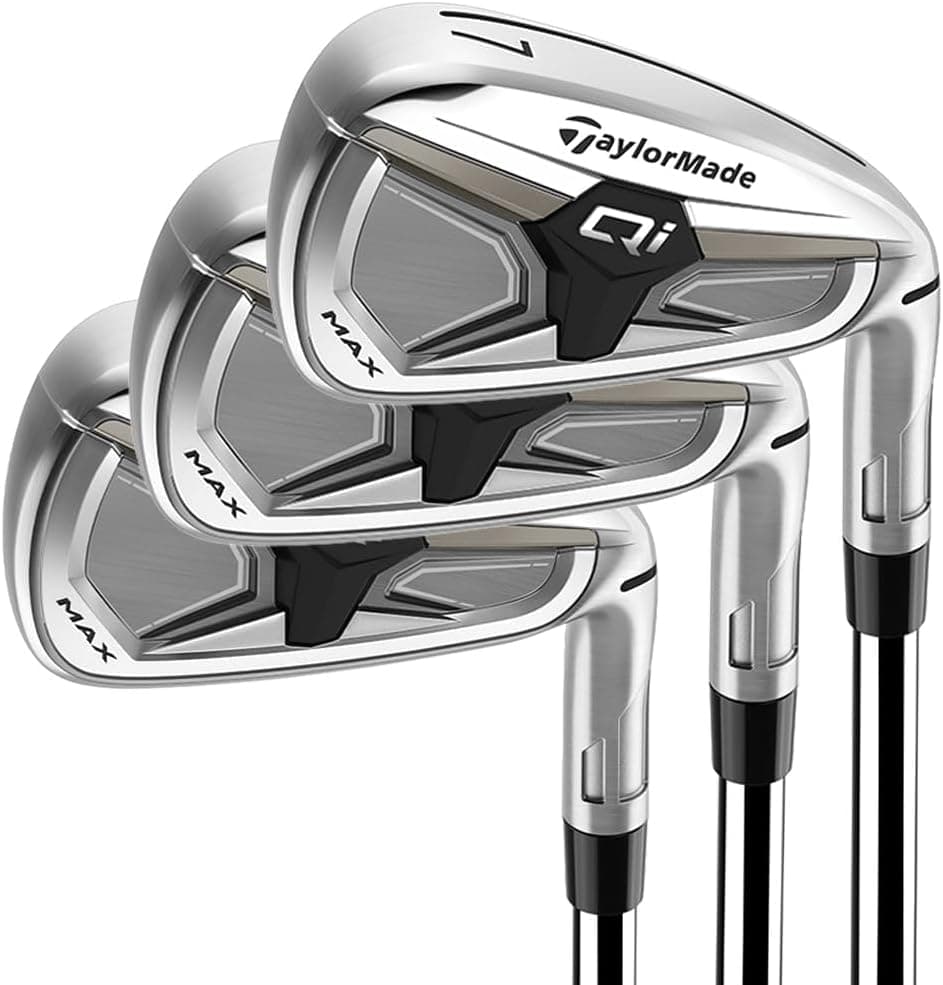
Taylormade Golf Qi Max Irons Steel Stiff Mens 4-PW
$1099.00
SUPERIOR FEEL AND SOUND What the golfers perceive as feel is largely the result of the sound the club makes at impact. The two areas most responsible for sound and feel are the top line and the face. In the Qi MAX, a new internal stability bar and ECHO Damper material have been strategically positioned to support these areas, reduce vibrations, and deliver premium feel in a game improvement iron. STRAIGHT DISTANCE Proven TaylorMade patented face technology controls face flexibility to reduce “cut” spin that can result from fast face iron designs, allowing golfers to experience straighter shots throughout the entire set. INDIVIDUAL HEAD OPTIMIZATION Each head has been designed to deliver specific performance for that individual iron. Starting with a foundation of maximum distance and forgiveness, the face design is tailored to deliver the launch and spin needed for straight, consistent shots with each iron. OPTIMIZED BALL FLIGHT FLTD CG strategically places the CG lowest in the long irons and higher as the set progresses. The design produces enhanced launch and playability in the long irons and precision and control in the scoring clubs. REFINED PLAYERS SHAPE Refined shaping reflects internal tech features to create an aspirational players look. Shaping includes a confidence-inspiring thinner top line and blade length that blend seamlessly with a reduced offset hosel.
#ad — As an Amazon Associate I earn from qualifying purchases.
Golf Balls for High Swing Speeds (105+ mph)
If you are swinging the driver over 105 mph, you are in the top tier of amateur golfers. You generate incredible clubhead speed and easily carry the ball over 250 yards.
What to look for:
- Compression Rating: 90 to 120
- Construction: 3, 4, or 5-piece design
- Cover Material: Cast Urethane
Fast swingers naturally generate a lot of compression. If a high-speed player uses a 50-compression ball, they will completely flatten the core, causing a loss of energy transfer and a mushy, uncontrollable feel. High-compression balls require serious force to activate the core, which translates to penetrating, powerful ball flights for fast swingers.
Furthermore, high-speed players rely heavily on shot-shaping and short-game spin. Urethane covers, combined with multi-layer mantles, allow these players to hit high-spinning wedge shots that stop on a dime.
Pros and Cons of High Compression Tour Balls
- Pros: Maximum greenside spin, excellent workability, penetrating ball flight in windy conditions.
- Cons: Very punishing on mis-hits, expensive, feels like a rock to slower swingers.
Quick Reference Guide: Swing Speed vs. Compression
Use this handy chart to identify your ideal golf ball profile:
| Driver Swing Speed | Typical Carry | Ideal Compression | Recommended Ball Type |
|---|---|---|---|
| Under 85 mph | Under 210 yards | 50 - 70 | 2-Piece Surlyn |
| 85 - 95 mph | 210 - 235 yards | 70 - 80 | 3-Piece Surlyn / Soft Urethane |
| 96 - 104 mph | 235 - 250 yards | 80 - 90 | 3-Piece Urethane |
| 105+ mph | 250+ yards | 90 - 120 | 4 or 5-Piece Urethane |
Look Good, Feel Good, Play Good
Once you have taken the time to dial in your equipment—matching your driver, irons, and golf ball to your unique swing speed—there is only one thing left to do: look the part on the course.
A confident golfer is a better golfer. Complete your on-course aesthetic with the BirdieFinder Two-Tone Mid Cap – Limited Edition. Designed for the weekend warrior who wants a clean, modern look, this hat features a structured mid-profile fit and breathable performance fabric that holds up from the first tee to the 19th hole.
With only 50 pieces available in the initial drop, it's an exclusive piece that pairs perfectly with your dialed-in game.
Common Myths About Golf Balls
Before we wrap up, let's bust a few pervasive myths about golf balls that confuse amateur players:
Myth 1: "Tour balls are the best for everyone."
False. Tour balls are designed for Tour swing speeds. While the urethane cover provides great greenside spin, a 90 mph swinger will not compress the core enough off the tee, resulting in shorter drives and exaggerated slices.
Myth 2: "Soft balls go further for fast swingers."
False. While a soft ball helps a slow swinger gain distance by maximizing compression, a fast swinger will actually lose distance with a soft ball. This is called "over-compressing," where energy is lost as the ball deforms too much.
Myth 3: "Weather doesn't affect my golf ball."
False. Temperature has a massive impact on golf ball compression. In cold weather, golf balls become much harder. A ball that feels perfect at 80 degrees might feel like a stone at 45 degrees. Many smart players will drop down to a lower compression ball during the winter months to maintain their distance.
How to Test Your New Golf Ball (The Sleeve Test)
Reading about compression is one thing, but feeling it on the course is another. We recommend doing the "Sleeve Test."
- Buy a sleeve of two different golf balls (e.g., one 70-compression and one 90-compression).
- Head to the putting and chipping green first. Hit pitch shots and putts. Notice which ball feels better off the putter face and which one checks up nicely on chips.
- Take them to the course. Hit a few drives with both. Pay attention to the ball flight. Is the higher compression ball falling out of the sky too early? Is the lower compression ball ballooning too high?
- Choose the ball that gives you confidence off the tee but still feels good around the greens.
Conclusion
Choosing the right golf ball for your swing speed is one of the easiest, most cost-effective ways to immediately improve your golf game. Stop playing random balls you find in the woods. By matching your driver speed to the correct compression rating, you will optimize your launch angle, maximize your carry distance, and hit straighter shots.
Take the time to test different models, pair your ball with high-quality forgiving clubs, and watch your scores drop this season.
BirdieFinder.Golf is a participant in the Amazon Services LLC Associates Program, an affiliate advertising program designed to provide a means for sites to earn advertising fees by advertising and linking to Amazon.com.