
Flush Every Approach: Iron Play Mechanics and Why the Mizuno JPX925 Hot Metal Irons Deliver
There is no feeling in golf quite like catching an iron dead flush. You know the exact sensation: the distinct, buttery "thwack" at impact, the almost non-existent vibration traveling up the shaft, and watching the ball launch on a penetrating, high-arcing trajectory that tracks right toward the pin. For a fleeting moment, you understand exactly why touring professionals dedicate their lives to this game.
However, for the majority of amateur golfers, that feeling is frustratingly elusive. We chunk, we thin, we hit it off the toe, and we watch our approach shots drift weakly into greenside bunkers. Achieving consistent, tour-level ball striking requires two critical components: sound swing mechanics and equipment that maximizes your natural abilities while masking your flaws.
In this comprehensive guide, we are going to dive deep into the mechanics of hitting pure approach shots and examine why the new Mizuno JPX925 Hot Metal Golf Iron Set is arguably the best game-improvement iron on the market for turning inconsistent ball striking into pin-seeking precision.
The Anatomy of a Perfect Iron Strike
Before we talk about the hardware, we need to address the software—your swing. You cannot buy a perfect golf swing, but understanding the physics of impact will help you get the most out of your irons. Let’s break down the three non-negotiable mechanics required to flush your irons.
1. Angle of Attack and the Low Point
One of the biggest misconceptions among amateur golfers is that you need to "lift" or scoop the ball into the air. In reality, modern irons are designed to be hit with a descending blow.
Your clubhead should make contact with the golf ball before it reaches the lowest point of the swing arc. This downward strike traps the ball against the clubface, generating the backspin required for lift and control. If you are taking divots behind the ball, your low point is too far back.
Pro Tip: Your divot should always start after the ball. Tour pros often have the low point of their swing up to 4 inches in front of the golf ball!
2. Forward Shaft Lean (Dynamic Loft)
When you set up to a 7-iron, the club might have 30 degrees of loft. However, at impact, professional golfers will have their hands pressed significantly forward, delofting the club to around 20 to 24 degrees. This is known as dynamic loft.
Forward shaft lean achieves two things:
- It ensures a downward angle of attack.
- It compresses the golf ball, maximizing energy transfer (smash factor) and ball speed.
3. Face-to-Path Relationship
To hit a straight shot—or a controlled draw/fade—your clubface angle and your swing path must be closely matched. A clubface that is wide open relative to an out-to-in swing path results in the dreaded slice. Flushing an iron requires squaring the face at impact so that the energy is directed straight through the center of gravity of the golf ball.
Enter the Mizuno JPX925 Hot Metal: A Game Improvement Marvel
Even when you start improving your mechanics, golf is hard. You aren't going to find the center of the clubface on every single swing. This is where advanced club engineering steps in.
Mizuno has long held a reputation as the premier iron manufacturer for better players, spawning the famous phrase, "Nothing feels like a Mizuno." But with the JPX Hot Metal lineage, Mizuno brought that legendary feel and precision to the mid-to-high handicap market. The JPX925 takes it to an entirely new level.
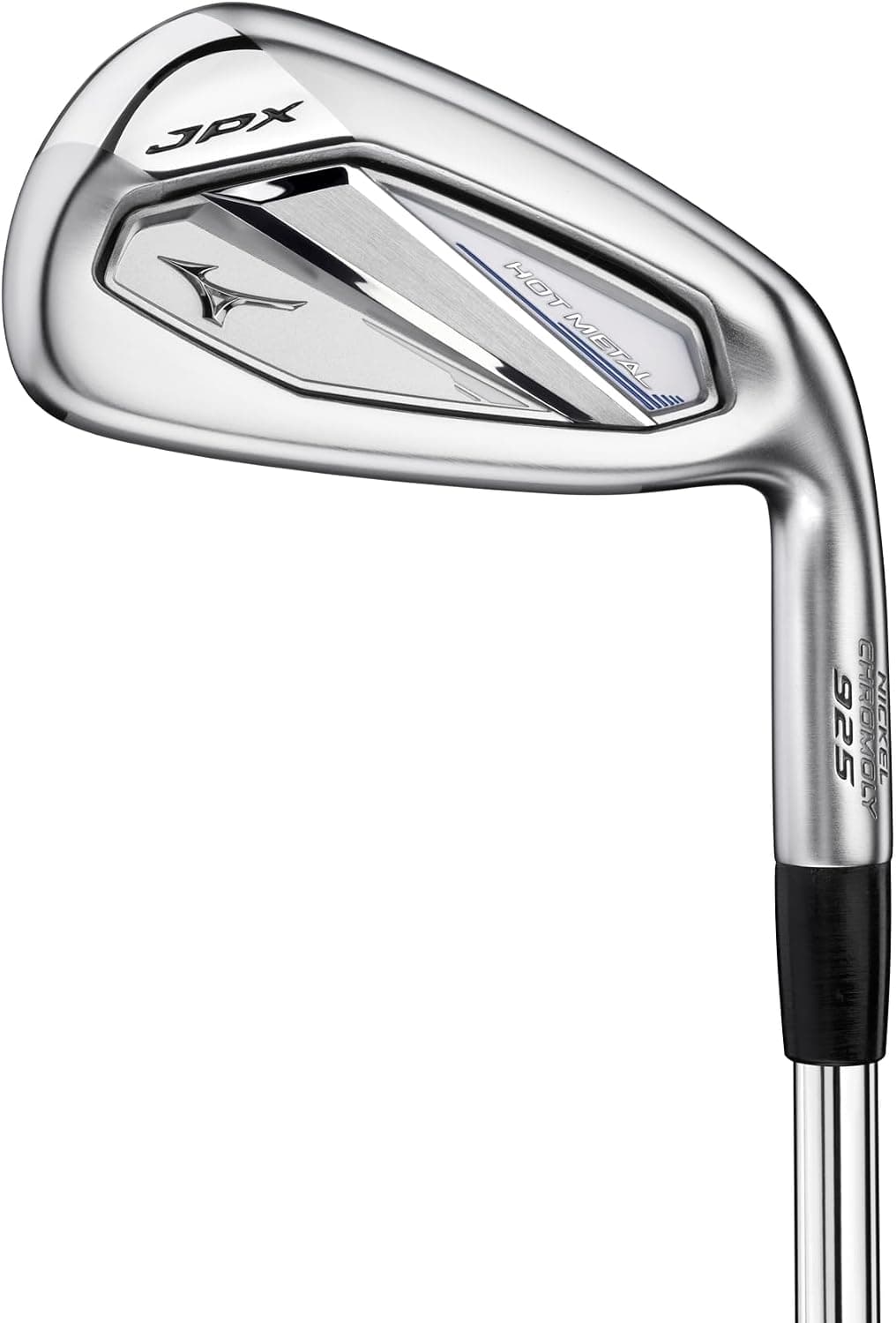
Mizuno JPX925 Hot Metal Golf Iron Set
From$1154.95
CORTECH Design: Optimized face thickness distribution to maximize COR AREA Seamless Cup Face: Thinned areas revolving 360 degrees around the perimeter increase rebound area for maximum ball speed across the entire face Variable Sole Thickness: Increase overall face flex area for add CORAREA Harmonic Impact Technology: Fine tuned head geometry delivers ideal impact feel and feedback Acoustic Sound Ribs: Precisely dial in specific vibration patterns for a solid, explosive impact sound
#ad — As an Amazon Associate I earn from qualifying purchases.
Let’s dissect exactly what makes this iron set a cheat code for your approach game.
CORTECH Design & Seamless Cup Face
If you want more distance, you need more ball speed. The JPX925 Hot Metal utilizes Mizuno’s proprietary CORTECH Design, which optimizes the thickness of the clubface. By making the center thicker for durability and feel, while drastically thinning the perimeter, Mizuno has created a massive "COR AREA" (Coefficient of Restitution).
Combine this with the Seamless Cup Face—a design where thinned areas revolve 360 degrees around the perimeter—and the result is a club that acts like a trampoline. Even when you miss the sweet spot and strike the ball low on the face or out on the toe, the rebound effect preserves your ball speed, meaning your miss-hits still end up on the green rather than in the front bunker.
Harmonic Impact Technology
A common complaint with game-improvement, hollow-body, or cavity-back irons is that they sound "clicky" or harsh. Mizuno refuses to compromise on feel. Through their Harmonic Impact Technology and strategically placed Acoustic Sound Ribs, Mizuno engineers have fine-tuned the head geometry.
The result? They’ve dialed in the specific vibration patterns to deliver a solid, explosive sound at impact. It gives you the auditory feedback of a pure forged blade, with the forgiveness of a super game-improvement iron. You literally hear and feel the flush, even if your mechanics weren't 100% perfect.
Variable Sole Thickness
Turf interaction is vital for maintaining speed through the strike. The Variable Sole Thickness on the JPX925 not only increases the overall face flex area, but it also allows the club head to glide effortlessly through the turf. Whether you are hitting from the short grass, the rough, or a tight lie, the sole design helps prevent the leading edge from digging, saving you from the dreaded chunk.
Pros and Cons of the Mizuno JPX925 Hot Metal Irons
The Pros:
- Explosive Ball Speeds: The Seamless Cup Face provides distance that rivals any game-improvement iron on the market.
- Unrivaled Feel: Acoustic Sound Ribs eliminate the harsh vibrations typically found in distance irons.
- Massive Sweet Spot: Exceptional forgiveness on off-center strikes keeps approach shots online and pin-high.
- Aesthetics: A beautifully clean, confidence-inspiring profile at address that doesn't look overly "clunky."
The Cons:
- Workability: If you are a scratch golfer looking to intentionally shape shots (huge hooks or cutting fades on command), the extreme forgiveness of this club will fight you.
- Lower Spin Rates: The hot face can sometimes result in slightly lower spin rates, meaning balls might roll out a bit more on firm greens.
How Does It Compare to the Competition?
To truly understand the value of the Mizuno JPX925 Hot Metal, we have to look at how it stacks up against other titans in the industry, such as the Taylormade Golf Qi Max Irons Steel Stiff Mens 4-PW and the Callaway Golf Elyte Iron Set Stiff.
| Feature/Spec | Mizuno JPX925 Hot Metal | TaylorMade Qi Max | Callaway Elyte |
|---|---|---|---|
| Target Player | Mid to High Handicap | High Handicap / Beginner | Mid Handicap |
| Core Tech | Seamless Cup Face & CORTECH | FLTD CG & ECHO Damper | Ai 10X Face & Speed Frame |
| Feel/Sound | Exceptional (Acoustic Sound Ribs) | Very Good (ECHO Damper) | Great (Speed Frame damping) |
| Forgiveness | Very High | Maximum | High |
| Profile Look | Sleek, moderate offset | Oversized, thicker topline | Modern, balanced cavity |
If maximum, pure forgiveness and straight distance are all you care about, the TaylorMade Qi Max is an incredible contender. It features individual head optimization to control face flexibility and reduce "cut" spin (that nasty slice).
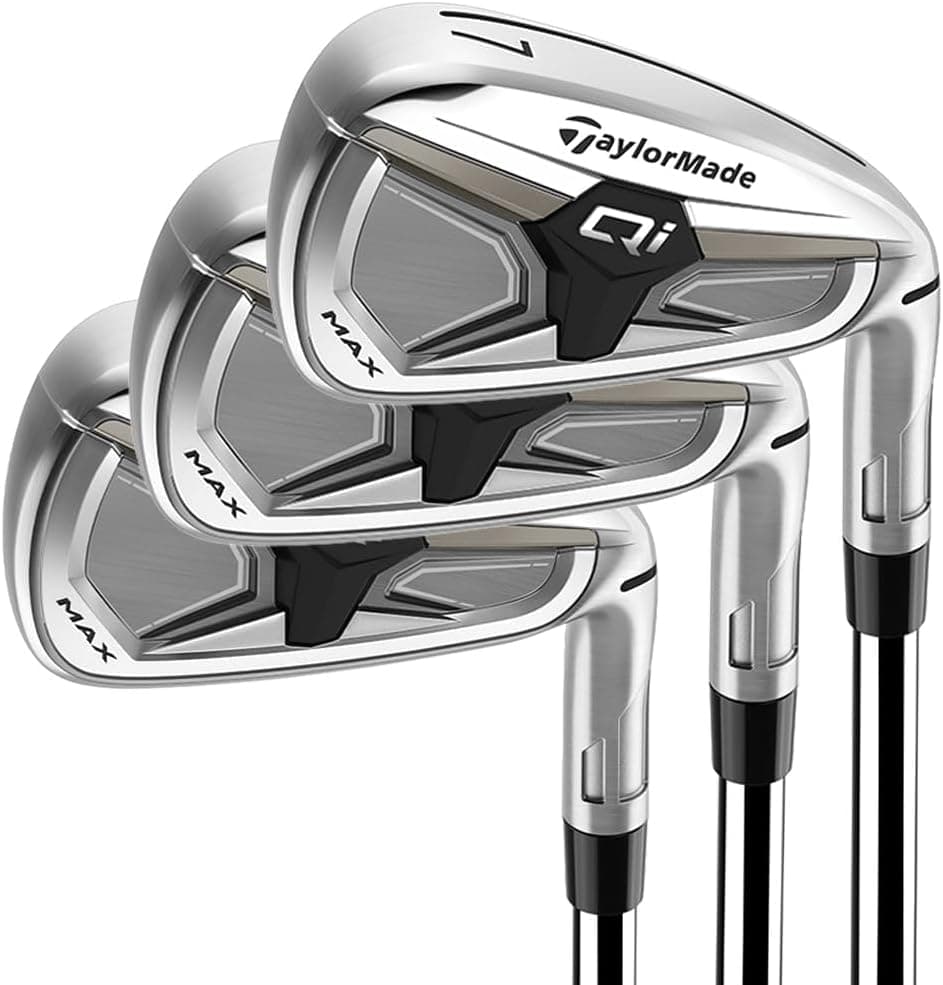
Taylormade Golf Qi Max Irons Steel Stiff Mens 4-PW
$1099.00
SUPERIOR FEEL AND SOUND What the golfers perceive as feel is largely the result of the sound the club makes at impact. The two areas most responsible for sound and feel are the top line and the face. In the Qi MAX, a new internal stability bar and ECHO Damper material have been strategically positioned to support these areas, reduce vibrations, and deliver premium feel in a game improvement iron. STRAIGHT DISTANCE Proven TaylorMade patented face technology controls face flexibility to reduce “cut” spin that can result from fast face iron designs, allowing golfers to experience straighter shots throughout the entire set. INDIVIDUAL HEAD OPTIMIZATION Each head has been designed to deliver specific performance for that individual iron. Starting with a foundation of maximum distance and forgiveness, the face design is tailored to deliver the launch and spin needed for straight, consistent shots with each iron. OPTIMIZED BALL FLIGHT FLTD CG strategically places the CG lowest in the long irons and higher as the set progresses. The design produces enhanced launch and playability in the long irons and precision and control in the scoring clubs. REFINED PLAYERS SHAPE Refined shaping reflects internal tech features to create an aspirational players look. Shaping includes a confidence-inspiring thinner top line and blade length that blend seamlessly with a reduced offset hosel.
#ad — As an Amazon Associate I earn from qualifying purchases.
However, if you want a club that blends premium feel, sleek aesthetics, and immense forgiveness—a club that will grow with you as your handicap drops—the Mizuno JPX925 is the clear winner.
(Note: For low-handicap players reading this who want maximum workability and a thin topline, you should be looking toward a players iron like the Srixon ZXi7 Iron Set with its proprietary forged construction.)
Dialing in Your Approach: Practice Drills for Better Ball Striking
Upgrading to the Mizuno JPX925 Hot Metal will instantly tighten your dispersion and add yards to your approaches. But to get the absolute most out of that Seamless Cup Face, you should pair your new clubs with a couple of reliable practice drills.
The Towel Drill (For Ball-First Contact)
- Lay a flat towel about 3 to 4 inches behind your golf ball on the driving range.
- Take your normal setup with your JPX925 7-iron.
- Make your swing. The goal is to strike the ball without disturbing the towel.
- If you hit the towel, your low point is too far back (you are casting the club or losing shaft lean). If you hit the ball cleanly, your mechanics are dialed in for a downward strike.
The Tee Drill (For Path Control)
- Place a tee just outside the toe of the golf ball, and another tee just inside the heel of the golf ball, creating a small gate.
- Swing through the gate.
- This drill trains spatial awareness of the clubface, ensuring you strike the ball in the center of the CORTECH face without favoring the toe or the heel.
Final Verdict: Are the JPX925 Irons Right for You?
Golf is a game of misses. The player who misses the best usually wins the match. While dialing in your angle of attack and shaft lean will dramatically improve your ceiling as a golfer, upgrading your equipment will immediately raise your floor.
The Mizuno JPX925 Hot Metal Golf Iron Set represents a masterclass in golf club engineering. By combining the explosive speed of the Seamless Cup Face with the sublime feedback of their Harmonic Impact Technology, Mizuno has created an iron that begs to be flushed.
Whether you are a weekend warrior looking to break 90 for the first time, or a seasoned mid-handicapper trying to push into single digits, the JPX925 Hot Metal provides the distance, forgiveness, and sensory joy required to elevate your approach game. Stop settling for fat shots and weak flares. Upgrade your bag, focus on your low point, and get ready to flush every approach.
BirdieFinder.Golf is a participant in the Amazon Services LLC Associates Program, an affiliate advertising program designed to provide a means for sites to earn advertising fees by advertising and linking to Amazon.com.